Through the lens: Celebrating the coastal grey wolf and Canada Post’s wolf stamp

This summer, Canada Post issued new stamps celebrating wolves and their important role as a keystone species. Each stamp offers…

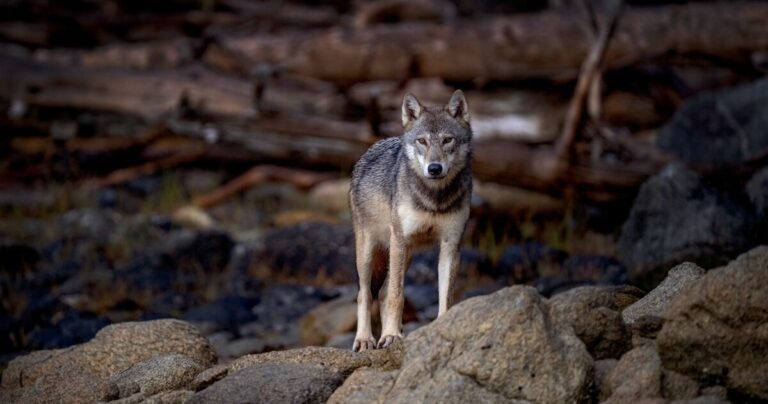
This summer, Canada Post issued new stamps celebrating wolves and their important role as a keystone species. Each stamp offers…
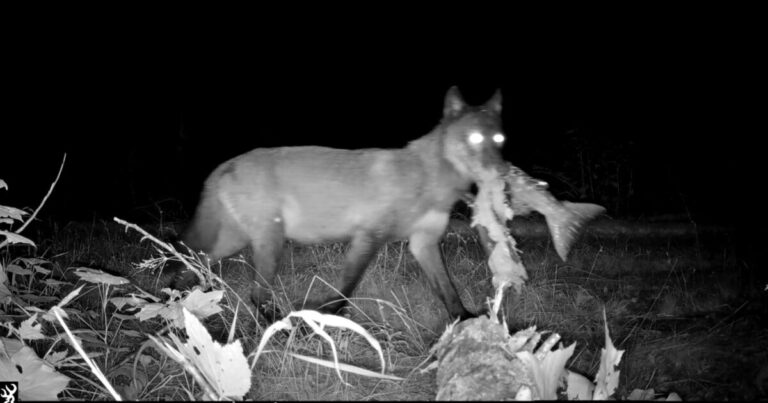
When salmon return to coastal rivers, they bring a seasonal pulse of food that ripples through the ecosystem. Wolves are…

Canada Post has issued new stamps celebrating wolves and their important role as a keystone species, shaping and sustaining the…

One predator. Countless ecological impacts. As apex predators, wolves help maintain healthier prey populations, provide food for scavengers, recycle nutrients…

Wolves are a keystone1 and umbrella2 species that help keep entire ecosystems in balance. By directly consuming prey, wolves influence…

It’s that time again: the Government of British Columbia is seeking yet another five-year approval to continue killing gray wolves…

The Government of British Columbia is seeking its second five-year approval to continue killing gray wolves in the name of…

Southern Mountain Caribou are an ecotype, or subpopulation, of caribou (Rangifer tarandus caribou), and are among the most endangered large…

Grey wolves historically occupied much of southern British Columbia, including west coast temperate rainforest ecosystems. However, widespread predator control programs…

Grey wolves (Canis lupus) historically occupied much of southern British Columbia, including west coast temperate rainforest ecosystems. However, widespread predator…

It is often said that it takes a village to raise a child, but you don’t fully understand what that…

Wolves live in tune with the changing seasons, their lives shaped by rhythm and ecology. In late winter, from January…

Wolves in mountainous regions, like those of British Columbia, roam some of the largest home ranges of any land mammal….

What does a wolf eat over the course of a year? How can we find out? Through scat analysis! As…

In collaboration with our First Nations partners, the Wolf Conservation Program continues to expand research and monitoring of wolves on…

It’s a cool evening in May of 2024 on a beach in Bella Bella, British Columbia, the traditional territory of…

Wolves are vital to the health and balance of ecosystems across British Columbia. As top predators, they help regulate the…

Our Conservation Genetics Lab has had an exciting year working on a wide range of research projects. We have completed…

In this Wolf Stories article, we’ve interviewed Sara Dubois (PhD), Chief Scientific Officer with the British Columbia Society for the…

In this article, we’ve interviewed David Fraser (C.M., Ph.D.), a Professor Emeritus in the Animal Welfare Program at the University…

Wolf control, often presented as a ‘solution’ to stabilize caribou populations, ultimately allows continued approval by governments of resource exploitation,…

Since 2022, we have been documenting the recolonization and recovery of wolves in a tributary of the Fraser River. Our…

Adam has joined our Cetacean Conservation Program to head up Raincoast’s new Conservation Genetics Lab. The lab is equipped with…
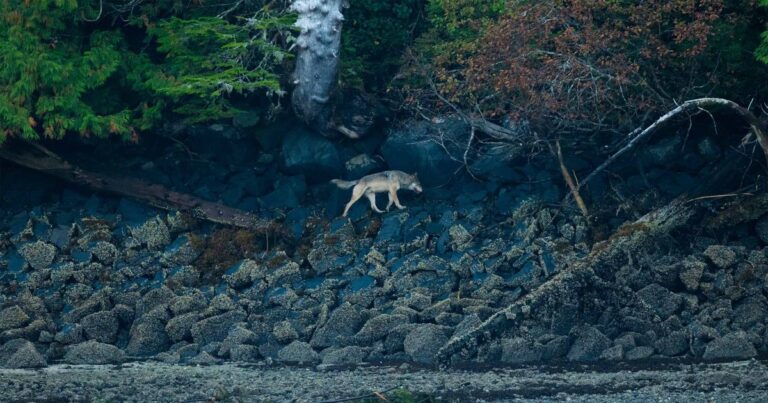
In 2012, an Indigenous-led campaign led to a ban on trophy hunting for bears on the central and north coasts…
Pink Sheep Media is a design and communications company.
This is our community hub. We have so many incredible researchers, writers, creators, and change-makers in our community.